Ancient Egypt • mysterious civilization
About Temples
History
Ancient Egypt was an empire that lasted for over 30 centuries, beginning with its unification around 3150 BC and ending with the dead of Cleopatra VII in 30 BC and the Roman conquest. Ancient Egypt is one of the most fascinating of the ancient civilizations. Thanks to the Nile, ancient Egypt was a prosperous empire and left a rich cultural legacy that kept us intrigued throughout history.
Discovering Ancient Egypt
ancient Egypt was the preeminent civilization.
Ancient Egypt was a civilization of ancient North
Africa, concentrated along the lower reaches of the Nile
River, situated in the place that is now the country
Egypt.


King Tutankhamun,
commonly known as King Tut, ascended to the throne of Egypt at the astonishingly young age of 9.
When Tutankhamun was buried, his mummified bodied was laid within a nest of three golden coffins, like a set of Russian dolls. When they tried to fit these inside the stone sarcophagus, the largest coffin proved to be too big. The toes peeked out and prevented the lid from closing.
King Tutankhamun’s golden coffin
King Tutankhamun’s golden coffin is one of the most exquisite and awe-inspiring artifacts of ancient Egypt.
It was crafted from 110 kilograms of pure gold. The coffin shows a dazzling image of the young pharaoh, which probably aimed to capture his likeness with remarkable detail.
Gold was a material associated with the gods and eternity in ancient Egyptian belief.
Ancient Egyptian Civilization
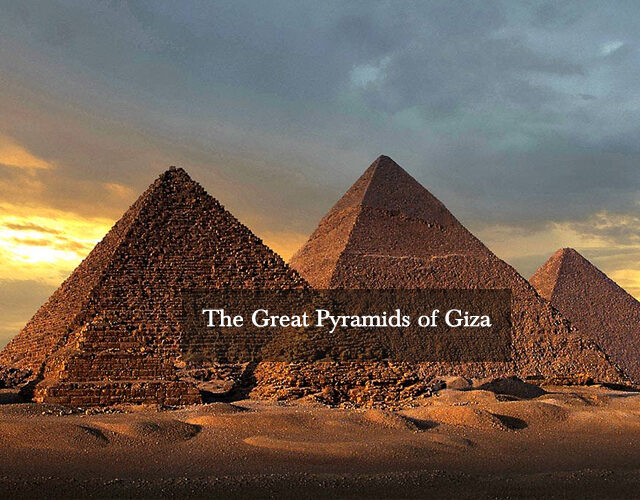
AFor almost 30 centuries—from its unification around 3100 B.C. to its conquest by Alexander the Great in 332 B.C.—ancient Egypt was the preeminent civilization in the Mediterranean world. From the great pyramids of the Old Kingdom through the military conquests of the New Kingdom, Egypt’s majesty has long entranced archaeologists and historians and created a vibrant field of study all its own: Egyptology. The main sources of information about ancient Egypt are the many monuments, objects and artifacts that have been recovered from archaeological sites, covered with hieroglyphs that have only recently been deciphered. The picture that emerges is of a culture with few equals in the beauty of its art, the accomplishment of its architecture or the richness of its religious traditions.
.
Gods
From the Predynastic Period in Egypt (c. 6000 – c. 3150 BCE) a belief in the gods defined the Egyptian culture. An early Egyptian creation myth tells of the god Atum who stood in the midst of swirling chaos before the beginning of time and spoke creation into existence. Atum was accompanied by the eternal force of heka (magic), personified in the god Heka and by other spiritual forces which would animate the world. Heka was the primal force which infused the universe and caused all things to operate as they did; it also allowed for the central value of the Egyptian culture: ma’at, harmony and balance.
All of the gods and all of their responsibilities went back to ma’at and heka. The sun rose and set as it did and the moon traveled its course across the sky and the seasons came and went in accordance with balance and order which was possible because of these two agencies. Ma’at was also personified as a deity, the goddess of the ostrich feather, to whom every king promised his full abilities and devotion. The king was associated with the god Horus in life and Osiris in death based upon a myth which became the most popular in Egyptian history.
Temples
EEgyptian temples were built for the official worship of the gods and in commemoration of the pharaohs in ancient Egypt and regions under Egyptian control. Temples were seen as houses for the gods or kings to whom they were dedicated. Within them, the Egyptians performed a variety of rituals, the central functions of Egyptian religion: giving offerings to the gods, reenacting their mythological interactions through festivals, and warding off the forces of chaos. These rituals were seen as necessary for the gods to continue to uphold maat, the divine order of the universe. Housing and caring for the gods were the obligations of pharaohs, who therefore dedicated prodigious resources to temple construction and maintenance. Out of necessity, pharaohs delegated most of their ritual duties to a host of priests, but most of the populace was excluded from direct participation in ceremonies and forbidden to enter a temple’s most sacred areas. Nevertheless, a temple was an important religious site for all classes of Egyptians, who went there to pray, give offerings, and seek oracular guidance from the god dwelling within.