Overview
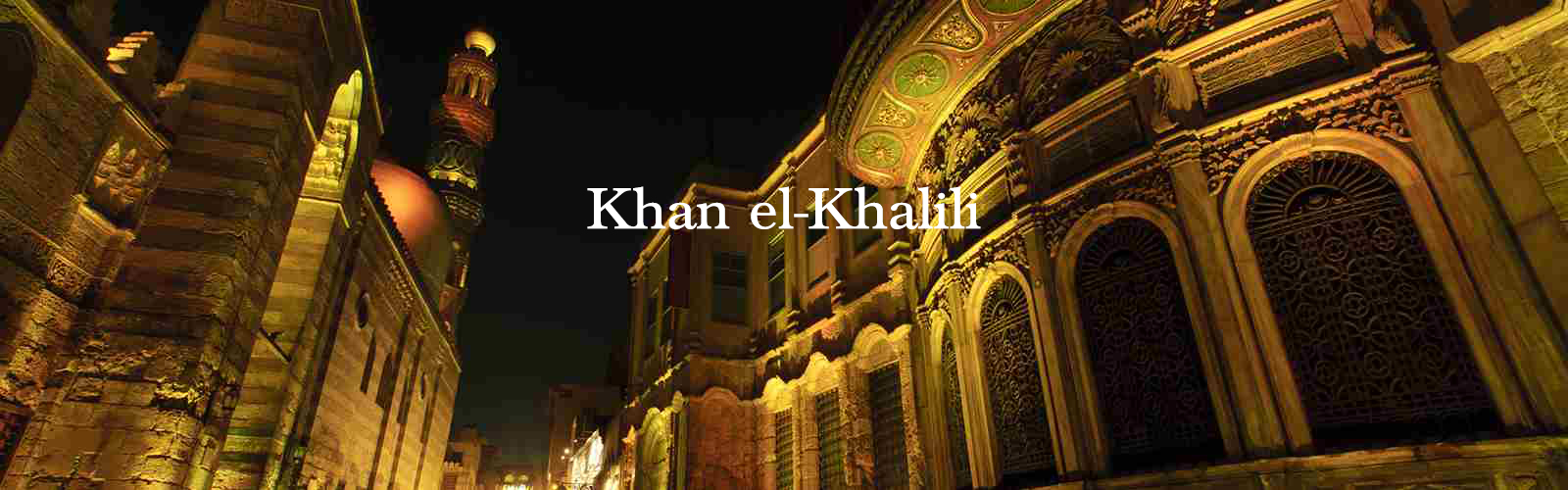
The Khan El Khalili Bazaar, established in the 14th century, has a fascinating history. Its origins trace back to Amir Karkas el-Khalili, who constructed the renowned trade complex adjacent to the Za’afran tomb, a sacred burial site for the Fatimid rulers in Egypt. This complex was part of a reconstruction initiative led by Sultan Barquq between 1382 and 1399, aimed at restoring the region after the devastation caused by the Black Death. Although the bazaar has undergone modernization, remnants of its antique architectural style, featuring arched portals and vaulted ceilings
Experience the joy of shopping at Khan el Khalili Bazaar as part of our Islamic Cairo walking tour. Immerse yourself in the vibrant atmosphere of this historic marketplace while exploring the treasures of Egyptian handicrafts and souvenirs. Discover a world of unique and intricately crafted items, from exquisite textiles and jewelry to traditional ceramics and spices. Our guided tour will lead you through the bustling alleyways, where you’ll have the opportunity to engage with local artisans and shopkeepers, gaining insights into their craftsmanship and stories. Whether you’re seeking memorable keepsakes or one-of-a-kind gifts, the Khan el Khalili Bazaar offers a diverse array of shopping delights. Join us for an unforgettable journey through Islamic Cairo, where cultural exploration and shopping pleasures converge in this iconic bazaar. .
Khan El Khalili Bazaar Location
Eis a combination of labyrinthine alleys that are truly like a time capsule able to contain a great amount of pure ancient art, magic, and absolute wonder. It’s where the various monumental religious complex was constructed during the Mamluk period in the reign of Sultan Al- Ghuri “Khan El Khalili Bazaar in 1501-1516“. The bazaar of Khan El Khalili contains an ornate gate and upper stories whose exterior is lined with iron-grilled windows and two monumental doors that are still holding their ground till today.
Khan El Khalili Bazaar map defines its location in the core of Cairo El-Gamaleya, El Gamaliya, Cairo Governorate. It’s not a closed space, rather, it’s among the widest open-air areas in Egypt to enjoy the travelers fully. The bazaar is the starting point for so many other sites from churches and mosques to cafes and restaurants! The first place there is El Fishawy Café.
Elaborate a little bit more and you’ll find Taha Hussein Café and
On the other side of Khan El Khalil
Khan El Khalili Bazaar Importance
iAl-Azhar Mosque and Wekalet El Ghouri. Located also there is Bab Zuweila, Bab El Futuh, and Bab Nasr. Khan El Khalili Bazaar is a fantastic place to be included on lots of travelers’ visit lists while being in Egypt. It offers classic aesthetics, magnetic feelings, and Medieval-Ages-like scenes. It’ll get you lost in a world filled with so many presentations of an ancient powerful and authentic civilization.
It’s one of the oldest streets in Islamic history. The history of Khan El Khalili Bazaar dates back to the 14th century when the large market complex was construed by Emir Dajaharks Al-Khalili on top of a mausoleum known as “Za’faraan“. It used to be the burial site of the Fatimid caliphs since 970 AD. The construction began by Sultan Barquq (1382-1399 AD) as a part of a process to reshape and revive the entire City of Cairo’s life force after the spoliation of the Black Death throughout the 13th and 14th centuries. All resulted in Khan El Khalili Bazaar being one of the most wondrous sites in Egypt with a value of gold.
Khan El Khalili contains many coffee houses designed to have great archways and vaulted ceiling that showcases the highest example of Mamluk and Ottoman architecture. Plus, it houses various restaurants and cafes like Al-Fishawi’s café which was established in 1773 AD next to Al-Azhar Mosque. The bazaar has other spaces you can have fun in whether solo with your family that’ll give you home-like feelings. Of course, the bazaar is one place in Egypt filled with easygoing locals to chat with and see how humble they are.
Sites of interest
- Fishawi Coffee. Open all day long and with more than 200 years of history, this is a must-see place to sit down for a cup of tea or coffee and enjoy its mirrored decor.
- Midaq Alley. It is the site where the novel “The Alley of Miracles” by Naguib Mahfuz, winner of the Nobel Prize for literature in 1988, is set. To get there, take Al-Muizz Street, follow Sanadiqiyah and in the first passage you find on your left you will be in Midaq. The movie based on the book was also filmed there.
- The Najaseen. This is where all the artisans who work with copper and who make unique pieces of surprising quality are grouped together.
What to buy in Khan El Khalili
- Papyrus. The typical scrolls that you can buy loose and blank or you can also ask for a message to be written in Arabic and handwritten.
- Beetles. The traditional amulet of the ancient Egyptians, which you can find handmade or mass-produced and is one of the traditional souvenirs of the country.
- Chilabas. Typical Egyptian clothing, ideal for wearing in the spring and summer months. You can get them in many models and colors.
- Perfumes and essences. There is a millenary tradition in Egypt of making essences and perfumes, therefore, a bottle is a good gift for someone you love very much or to give to yourself.
- Alabaster objects. All kinds of ornaments, objects and statuettes you can find in alabaster worked in three ways: machine polished or smooth, hand polished, and unpolished, which is the most expensive and the best.
- Leather objects. Handbags, purses, shoes, sandals and all kinds of leather goods handcrafted by fine artisans.