
Bentomy
Project Overview
Title: PenTomy.
Type: Business
role
Duration:4 weeks Role: Product Designer/UX research, interaction design, prototyping, testing
Executive summary&
Through these conversations, many of them also shared negative experiences they had in certain hotels. They mentioned issues like poor‑quality towels, uncomfortable slippers, low‑grade napkins served with meals, and other disappointing hospitality items that affected their stay.
Hearing these repeated complaints sparked an idea. I realized there was a real gap in the market and a strong need for better‑quality hotel supplies. That insight inspired me to expand my business and start importing high‑quality products for hotels and resorts—aiming to improve the guest experience and help hospitality businesses offer better standards to their customers.
Target Audience:
- Primary Users: Hotel and resort procurement managers and hospitality staff responsible for sourcing and managing supplies. They prioritize cost-efficiency, quality assurance, and alignment with guest expectations.
- Secondary Users: Hotel guests, including families, business travelers, and eco-conscious individuals, who seek comfort, sustainability, and modern amenities during stays.
- Stakeholders: Bentommy’s internal team and external partners (hotels, suppliers) focused on sustainable growth and market expansion.
Problem Statement
- Inconsistent Product Quality: Some Hotels and resorts often provide low-quality essentials such as towels, slippers, and napkins, resulting in guest discomfort and dissatisfaction that undermines the overall stay experience.
- Negative Guest Experience: Substandard hospitality items directly reduce perceived comfort and satisfaction, leading to a diminished sense of well-being during stays.
- Hidden Impact on Online Reputation: Poor-quality supplies contribute to negative reviews and lower ratings, yet procurement teams lack clear visibility into the direct link between supply quality and reputational outcomes, complicating efforts to address feedback.
- Mismatch with Guest Expectations: Many guests seek modern and advanced bathroom equipment to match the value of their investment, but the absence of such amenities in some hotels and resorts lowers overall satisfaction and comfort, creating a gap between expectations and reality.
- Impact on Bookings and Repeat Visits: Dissatisfying experiences from low-quality supplies and outdated amenities deter potential guests from booking in the first place and discourage repeat visits, as word of mouth and online reviews amplify perceptions of poor value, ultimately reducing revenue and customer loyalty.
Goal:
⭐ Boost procurement efficiency by 25%, reduce negative reviews linked to supplies by 15%, and increase repeat orders through better user experience.
⭐ increase in guest comfort ratings
⭐ fewer negative reviews mentioning “towels”
⭐Drive higher repeat bookings through enhanced satisfaction and loyalty
⭐ Improve sustainability credentials; reduce supply replacement frequency.
Tools: Paper for sketching, Figma for wireframing/prototyping, archived user feedback for validation.
Solutions
- Introduce a Curated Product Line with Quality Assurance: import a modular supply kit (e.g., towels, slippers, napkins) using premium, sustainable materials tested for durability and comfort. Include user feedback loops via post-stay surveys to refine products, ensuring they meet diverse guest needs (e.g., hypoallergenic options for sensitive skin) and reduce dissatisfaction from low-quality items.
Iterative Prototyping and User Testing: Conduct on-site UX testing with diverse guest personas (e.g., families, business travelers) to prototype supplies like ergonomic slippers or biodegradable napkins. Gather qualitative data through interviews and A/B testing to ensure solutions evolve based on real-world comfort and satisfaction metrics.
Review & Feedback Integration
Allow hotels to see anonymized guest feedback trends related to hospitality items.
Provide sentiment analysis to highlight recurring issues.
Suggest product replacements when negative trends appear.
ROI Visualization for Hotel Managers
Show how investing in higher‑quality supplies reduces negative reviews and increases repeat bookings.
Provide cost‑benefit visualizations comparing low‑quality vs. premium supplies.
Include case studies from other hotels that improved ratings after upgrading.
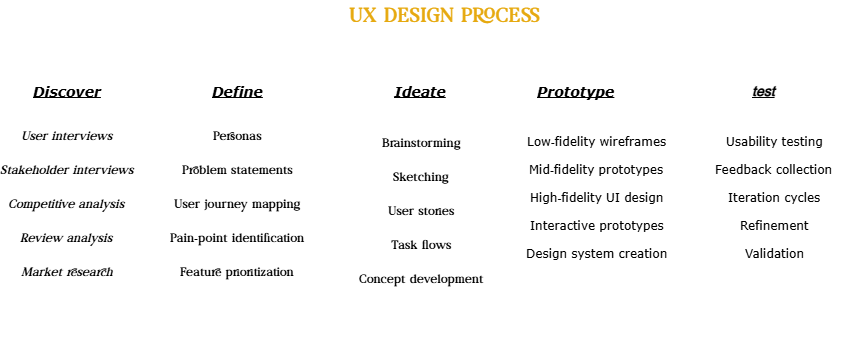
- Human-Centered Design Principles: Applied principles to enhance comfort, accessibility, and satisfaction for global hotel guests.
- End-to-End UX Research: Conducted qualitative and quantitative research via on-site hotel visits, contextual inquiries, and field studies. Observed guests and staff to identify needs, accessibility issues, and workflow gaps, translating insights into improved usability, comfort, and quality.
- Competitive Analysis and Market Positioning: Identified gaps, analyzed competitors, and uncovered pain points through user interviews, usability testing, and iterative prototyping.
- Usability Testing and Validation: Designed test scripts, recruited participants, ran moderated and unmoderated tests, synthesized findings, and prioritized fixes.
rechearch
As an owner committed to expanding the company in ways that truly meet user needs, I led a comprehensive research initiative combining both qualitative and quantitative methods. My goal was to uncover pain points, understand user challenges, validate key assumptions, and quantify the issues that mattered most.
This work included in‑depth interviews with 20 hotel managers and 15 guests, along with surveys completed by 200 hospitality professionals and 500 guests. I also analyzed archived user feedback and leveraged sentiment‑analysis tools to further validate insights and ensure a data‑driven understanding of user expectations
Qualitative Research: User Interview Questions
Conducted 1-on-1 semi-structured interviews (15–20 guests across different hotel types + 8 procurement/housekeeping staff).
Interviews delved deeper into experiences, emotions, and unmet needs. Sample questions for hotel managers and guests:
- Can you walk me through a recent experience where supply quality affected a guest’s stay? What specific items were problematic? (Open-ended for stories)
- What pain points do you face in sourcing and managing high-quality, sustainable supplies? (Hotel managers)
- How do low-quality items like towels or slippers impact your comfort and overall satisfaction during a stay? (Guests)
- What features would make supplies more accessible or delightful for diverse guests (e.g., families, business travelers)? (Both)
- How do you currently handle guest feedback on supplies, and what improvements would help? (Hotel managers)
Sample interview questions (guests):
- Describe your most recent hotel stay. What stood out positively or negatively about the room amenities (towels, linens, slippers, toiletries)?
- How important are the quality of towels and linens to your overall comfort and sleep experience?
- Have you ever felt disappointed by bathroom amenities or slippers? What specifically bothered you?
- What does “luxury” or “comfort” mean to you in a hotel setting?
- How do room supplies influence your perception of value for the price paid?
- Do you have any allergies or sensitivities that affect your choice of towels, linens, or toiletries?
- How important is sustainability (e.g., organic cotton, biodegradable packaging) in hotel products?
- Have you ever left a review mentioning room supplies? What prompted it?
- What would make you more likely to return to a hotel or recommend it?
- If you could improve one thing about hotel room essentials, what would it be?
Sample interview questions (procurement staff):
- How do you currently evaluate and select suppliers for towels, linens, and amenities?
- What feedback do you receive from guests or housekeeping about product quality?
- Have you noticed correlations between supply upgrades and review scores/bookings?
- What are your biggest challenges in procurement (cost, durability, guest satisfaction)?
Key Insights: Guests expressed frustration with “scratchy” towels and “uncomfortable” slippers, leading to reduced well-being. Managers highlighted visibility gaps in feedback trends and the need for ROI data to justify premium investments.
Quantitative Research: Survey Questions
Surveys targeted hotel managers and guests to gather data on satisfaction, quality perceptions, and behavioral impacts. Key questions included:
Distributed online post-stay surveys to 350+ guests and 80 procurement managers.
Guest survey questions (mostly 1–5 Likert scale: Strongly Disagree to Strongly Agree):
- On a scale of 1-10, how satisfied are you with the quality of towels, slippers, and napkins provided during your stay? (Guest survey)
- What percentage of your negative reviews mention low-quality supplies like towels or amenities? (Hotel manager survey)
- How often do you repurchase supplies from the same vendor due to quality and user feedback? (Hotel manager survey)
- Rate the impact of supply quality on your overall comfort and likelihood to return (1-10). (Guest survey)
- What is your annual budget for hospitality supplies, and how much do quality issues cost in lost bookings? (Hotel manager survey)
- The towels were soft and absorbent enough for my needs.
- The bed linens felt luxurious and contributed to a good night’s sleep.
- The slippers were comfortable and fit well.
- Bathroom amenities (shampoo, lotion, etc.) met my expectations.
- Overall, the room supplies enhanced my comfort during the stay.
- I would be likely to return to this hotel partly because of the room quality.
- Sustainability of materials matters to me when evaluating a hotel.
- How satisfied were you with the room essentials? (1–10 scale)
- Did any room supplies negatively affect your stay? (Yes/No + open text)
- How many times have you stayed at a hotel where low-quality towels or linens disappointed you? (Never / 1–3 / 4–10 / 10+)
Procurement survey questions:
- Upgrading to premium supplies would positively impact guest reviews (1–5 agreement).
- We track guest feedback specifically related to room amenities (Yes/No/Partially).
- Cost is the primary factor in supplier selection (1–5 agreement).
- Percentage of negative reviews you believe are linked to room supplies: (0–10% / 11–25% / 26–50% / >50%).
Procurement survey questions:
- Upgrading to premium supplies would positively impact guest reviews (1–5 agreement).
- We track guest feedback specifically related to room amenities (Yes/No/Partially).
- Cost is the primary factor in supplier selection (1–5 agreement).
- Percentage of negative reviews you believe are linked to room supplies: (0–10% / 11–25% / 26–50% / >50%).
User Personas
Key Findings: 65% of guests rated supply quality below 7/10, with 40% citing towels as a dissatisfaction driver. Hotels reported 20% of negative reviews linked to supplies, costing an average of $50,000 annually in lost revenue.
Item #1
Item #2
Item #3
Roles:
- Human-Centered Design Principles: Applied principles to enhance comfort, accessibility, and satisfaction for global hotel guests.
- End-to-End UX Research: Conducted qualitative and quantitative research via on-site hotel visits, contextual inquiries, and field studies. Observed guests and staff to identify needs, accessibility issues, and workflow gaps, translating insights into improved usability, comfort, and quality.
- Competitive Analysis and Market Positioning: Identified gaps, analyzed competitors, and uncovered pain points through user interviews, usability testing, and iterative prototyping.
- Usability Testing and Validation: Designed test scripts, recruited participants, ran moderated and unmoderated tests, synthesized findings, and prioritized fixes.
Duration:4 weeks Role: Product Designer/UX research, interaction design, prototyping, testing
Executive summary&
Through these conversations, many of them also shared negative experiences they had in certain hotels. They mentioned issues like poor‑quality towels, uncomfortable slippers, low‑grade napkins served with meals, and other disappointing hospitality items that affected their stay.
Hearing these repeated complaints sparked an idea. I realized there was a real gap in the market and a strong need for better‑quality hotel supplies. That insight inspired me to expand my business and start importing high‑quality products for hotels and resorts—aiming to improve the guest experience and help hospitality businesses offer better standards to their customers.